

Pendant longtemps, les graisses alimentaires ont été considérées comme uniformément nocives — un élément à réduire ou à éviter à tout prix. Toda y, La science nous raconte pourtant une tout autre histoire. Les graisses de haute qualité jouent un rôle essentiel dans la prévention de nombreuses maladies chroniques, et les acides gras oméga-3 en particulier sont devenus l'un des domaines les plus étudiés de la recherche nutritionnelle. La classification des acides gras peut sembler compliquée à première vue, mais la compréhension de quelques concepts clés — notamment ce que sont le DHA et l’EPA et ce que mesure l’indice Totox — facilite grandement l’évaluation de la qualité et permet de faire des choix judicieux.
Graisses et acides gras : les bases
Les graisses constituent un groupe vaste et chimiquement diversifié de composés, mais elles partagent une structure commune: chaque molécule est composée de glycérol et d’un ou plusieurs acides gras. C’est la composante acide gras qui détermine à la fois les propriétés physiques et les effets sur la santé d’une graisse donnée. Au-delà d'être le carburant le plus riche en énergie de l'organisme, les graisses servent de vecteurs aux vitamines liposolubles — A, D, E, et K — et constituent un élément indispensable de toutes les membranes cellulaires de l'organisme.
Que sont les acides gras? Les acides gras sont des composés organiques contenant un groupe carboxyle. Dans la nature, on les trouve généralement sous forme d'esters liés au glycérol. Ils constituent des composants structurels du cerveau, du système nerveux et des membranes cellulaires, et leur influence s'étend à pratiquement tous les aspects de la santé humaine, tant physique que psychologique. La valeur nutritionnelle d'une graisse dépend principalement du type et du degré de saturation des acides gras qu'elle contient. Types d'acides gras : saturation et effets sur la santé
Les acides gras sont classés en trois groupes principaux en fonction du nombre de doubles liaisons dans leur chaîne carbonée — en d'autres termes, de leur degré de saturation. C'est cette différence structurelle qui fait que certaines graisses sont bénéfiques pour la santé et d'autres potentiellement nocives.
Acides gras saturés
Les acides gras saturés se trouvent principalement dans les produits d'origine animale tels que le beurre, la charcuterie, et la viande rouge. L'organisme les utilise principalement comme source d'énergie concentrée, mais une consommation excessive est associée à une élévation du taux de cholestérol et à un risque accru de maladies cardiovasculaires. Il est important de noter, que l'organisme peut les synthétiser en interne, de sorte qu'il n'est pas nécessaire de les obtenir par l'alimentation — ce qui rend la surconsommation facile et mérite d'être surveillée.
Les acides gras monoinsaturés
Les graisses monoinsaturées, dont l'oméga-9 est le principal représentant, aident à maintenir un taux de cholestérol sain et soutiennent la fonction cardiovasculaire lorsqu'elles sont consommées avec modération. L'organisme peut produire lui-même des oméga-9 — à condition d'un apport adéquat en oméga-3 et oméga-6 —, ils ne sont donc pas considérés comme des acides gras essentiels au sens strict.
Acides gras polyinsaturés UNS (AGPI): Les essentiels
Les acides gras polyUNS insaturés — également appelés acides gras essentiels (AGE) — constituent le groupe le plus important d'un point de vue nutritionnel. L'organisme humain ne peut pas les synthétiser de manière autonome, ce qui signifie qu'ils doivent être apportés par l'alimentation ou par des compléments alimentaires. Ils régulent les processus physiologiques, contribuent à la structure cellulaire, et peuvent aider à prévenir ou à réduire la gravité de maladies graves, notamment les maladies coronariennes, les accidents vasculaires cérébraux, et les troubles auto-immuns.
Deux sous-groupes dominent le débat clinique:
- Les acides gras oméga-3 — influencent le métabolisme hormonal et lipidique, protègent le cerveau, contribuent à la santé cardiovasculaire, et aident à modérer l'inflammation chronique. Les principaux représentants sont l'ALA ((acide alpha-linolénique)), l'EPA ((acide eicosapentaénoïque)), et le DHA ((acide docosahexaénoïque)).
- Les acides gras oméga-6 — présentent des propriétés anti-inflammatoires et immunostimulantes, et contribuent à réduire le cholestérol LDL et la pression artérielle. Le représentant le plus significatif sur le plan clinique est l'acide linoléique (LA).
DHA et EPA: ce qu'ils sont et pourquoi ils sont importants
Le DHA et l'EPA sont deux acides gras oméga-3 à longue chaîne ayant des rôles distincts mais complémentaires. Ensemble,, ils représentent les formes les plus biologiquement actives d’oméga-3 et se trouvent principalement dans les sources marines — les poissons d’eau froide, certains fruits de mer, et l’huile de poisson de haute qualité.
Le DHA ((acide docosahexaénoïque)) est un composant essentiel du tissu cérébral et de la rétine. Des recherches ont établi un lien entre de faibles taux de DHA et un risque accru de maladies cardiovasculaires, de dysfonctionnements immunitaires, et de troubles psychologiques, notamment la dépression. Il est également indispensable pendant la grossesse et la petite enfance pour le développement du système nerveux central.
L'EPA ((acide eicosapentaénoïque)) intervient dans la transmission des signaux nerveux entre les fibres, soutient les fonctions cognitives et la concentration, et a démontré des bienfaits dans un large éventail de troubles inflammatoires. Il est intéressant de noter que l'EPA peut servir de précurseur biochimique au DHA — l'organisme est capable de le convertir, bien que le taux de conversion soit limité.
L'écart entre les recommandations et la réalité
Les données issues d'enquêtes alimentaires à grande échelle montrent systématiquement que l'apport en DHA et en EPA est nettement inférieur aux niveaux recommandés par les experts, et ce dans toutes les tranches d'âge. Les principales sources alimentaires sont les poissons de mer, certains fruits de mer, et l’huile de poisson pure — des aliments que la plupart des gens ne consomment tout simplement pas en quantités suffisantes. Pour ceux qui ne mangent pas régulièrement de poisson gras, la supplémentation est souvent le moyen le plus pratique d’atteindre un apport adéquat. Notre gamme d'huiles de poisson et d' Oméga (EPA/DHA) couvre un large éventail d'options, allant des capsules d'huile de poisson standard aux formats liquides hautement concentrés, en passant par des alternatives végétaliennes à base d'algues.
L'indice Totox: l'indicateur de qualité à connaître
La teneur en EPA et en DHA vous indique ce que contient une huile de poisson. L'indice Totox vous indique si cette teneur est toujours intacte — et si l'huile peut être consommée sans danger.
Les acides gras, et les oméga-3 en particulier, sont sujets à l'oxydation. Lorsque l'huile de poisson s'oxyde, elle génère des peroxydes et des radicaux réactifs — des composés qui non seulement dégradent la valeur nutritionnelle de l'huile, mais posent également un réel risque pour la santé en raison des dommages oxydatifs cumulatifs causés aux tissus et aux organes.
La valeur Totox est calculée en combinant deux mesures d'oxydation: l'indice de peroxyde (PV) et l'indice d'anisidine (AV), à l'aide de la formule: Totox = 2×PV + AV. Selon l'EFSA (, l'Autorité européenne de sécurité des aliments), une valeur Totox inférieure à 25 est requise pour que l'huile de poisson soit considérée comme acceptable. Plus la valeur est faible, plus l'huile est fraîche et stable.
Choisir le bon complément oméga-3
Au-delà de l'indice Totox, quelques autres facteurs méritent d'être pris en compte lors du choix d'un complément oméga-3. La forme triglycéridique est généralement considérée comme offrant une meilleure biodisponibilité que la forme d'ester éthylique. La concentration est importante: la teneur combinée en EPA et DHA par portion est plus informative que la teneur totale en huile de poisson. Et pour ceux qui suivent un régime végétalien ou à base de plantes, les compléments oméga-3 à base d'algues fournissent du DHA et de l'EPA provenant directement de la source marine d'origine, sans poisson.
Pour le soutien cardiovasculaire et cérébral en particulier, nos catégories Cerveau & Cognitive et Cardiovascular comprennent des compléments oméga-3 ainsi que d'autres nutriments complémentaires.
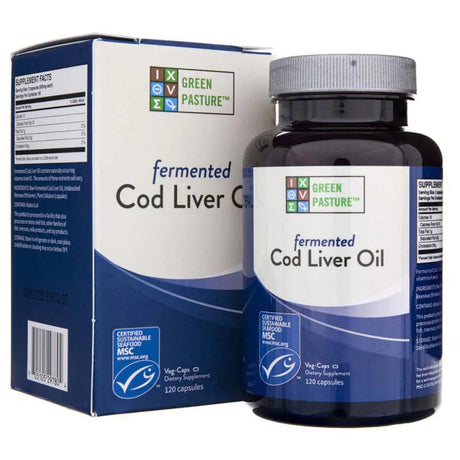


Green Pasture
Green Pasture Huile de foie de morue fermentée, non aromatisée - 120 Capsules
Prix habituel €51.49Prix unitaire€0.43 pièce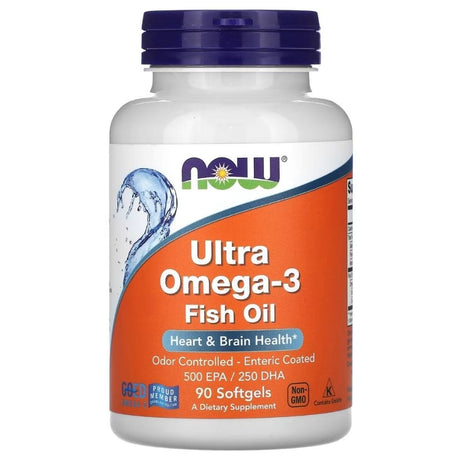
Now Foods
Now Foods Ultra Oméga-3, 500 EPA / 250 DHA - 90 capsules molles
Prix habituel €18.99Prix unitaire€0.21 pièce


Rosita
Rosita Extra Virgin Cod Liver Oil (EVCLO) - 150 ml
Prix habituel €43.99Prix unitaire€293.27 /L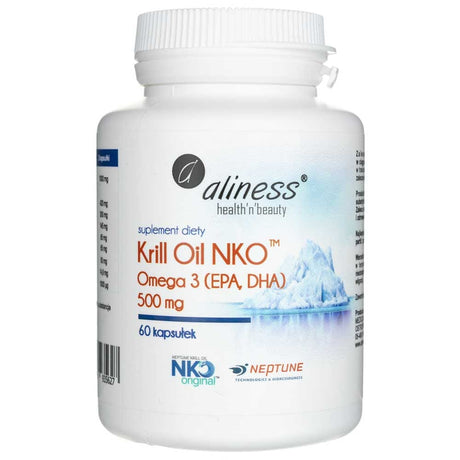


Aliness
Aliness Krill Oil NKO Omega 3 with Astaxanthin 500 mg - 60 Capsules
Prix habituel €16.19Prix unitaire€0.27 pièce


Pour des options à base de plantes et une supplémentation quotidienne à un prix plus abordable, les produits suivants méritent d'être explorés :


Aliness
Aliness Vegan Omega 3 FORTE DHA 500 mg - 60 Veg Capsules
Prix habituel €18.69Prix unitaire€0.31 pièce


Vitaler's
Vitaler's Omega-3 FORTE 1000 mg - 120 Capsules
Prix habituel €14.29Prix unitaire€0.12 pièce
Aliness
Aliness Oméga 3 Forte Triglycérides de Poisson 500/250 mg - 60 gélules
Prix habituel €13.39Prix unitaire€0.22 pièce


Now Foods
Now Foods Oméga-3, 180 EPA / 120 DHA - 100 softgels
Prix habituel €11.49Prix unitaire€0.11 pièce


Solgar
Solgar Triple Strength Omega 3 950 mg - 50 softgels
Prix habituel €24.99Prix unitaire€0.50 pièce


Cet article est fourni à titre informatif et ne remplace pas un avis médical. En cas de problème de santé, de grossesse, d’allaitement ou de prise de médicaments, consultez un médecin ou un pharmacien. Les compléments alimentaires ne remplacent pas une alimentation variée.


